Text
בָּרוּךְ אַתָּה יְיָ אֱלֹהֵינוּ מֶלֶךְ הָעוֹלָם, אֲשֶׁר קִדְּשָׁנוּ בְּמִצְוֹתָיו וְצִוָּנוּ עַל נְטִילַת לוּלָב. בָּרוּךְ אַתָּה יְיָ אֱלֹהֵינוּ מֶלֶךְ הָעוֹלָם, שֶׁהֶחֱיָנוּ וְקִיְּמָנוּ וְהִגִּיעָנוּ לַזְּמַן הַזֶּה.
Transliteration
Baruch ata Adonaj, Elohejnu melech ha-olam, ašer kidšanu be-micvotav ve-civanu al netilat lulav. Baruch ata Adonaj, Elohejnu melech ha-olam, šehechejanu ve-kijmanu ve-higi’anu la-zman ha-ze.
Translation
Blessed are You, Lord our God, King of the universe, who has sanctified us with His commandments and commanded us to take up the lulav. Blessed are You, Lord our God, King of the universe, who has given us life, sustained us and enabled us to reach this time.
The Hebrew liturgical text is in the public domain; the translation is original.
Notes and differences between rites
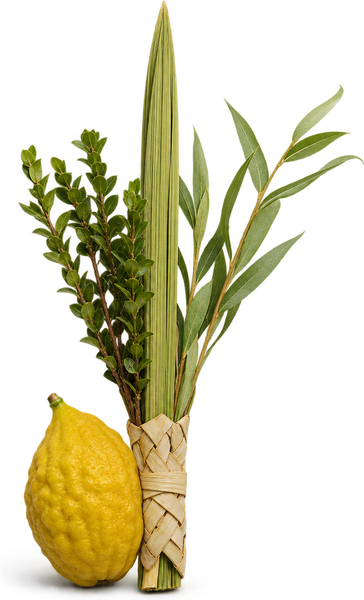
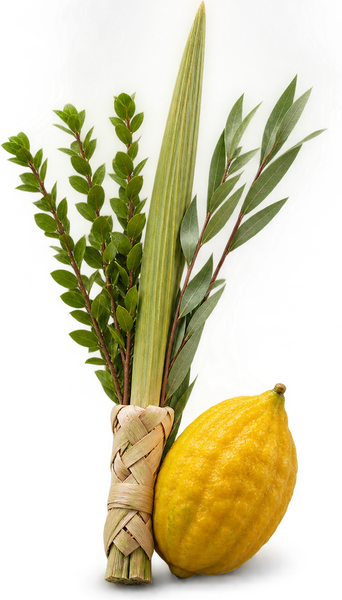
The commandment derives from the verse “on the first day you shall take the fruit of a beautiful tree, branches of palm trees, boughs of leafy trees and willows of the brook”.1
The lulav is held in the right hand and the etrog in the left; by widespread custom the etrog is held upside down (stem up) during the blessing and turned over only afterwards, so that the blessing precedes the fulfillment of the commandment.2
Shehecheyanu is said only the first time one takes the lulav in the year. Women who take the lulav usually recite the blessing in Ashkenazi practice; in Sephardi practice they often do so without a blessing.
Sources
Primary sources
- 1Leviticus, 23:40 text ↗
- 2Shulchan Arukh, Orach Chayim, 651:5 text ↗
- 3Mishnah Sukkah, 3 text ↗
- 4Shulchan Arukh, Orach Chayim, 651 text ↗