Origin
Meaning
The mezuzah expresses that the home is a space for the word of God. Maimonides rejects understanding it as an amulet: its purpose is to recall the oneness of God at every coming in and going out.3
Use
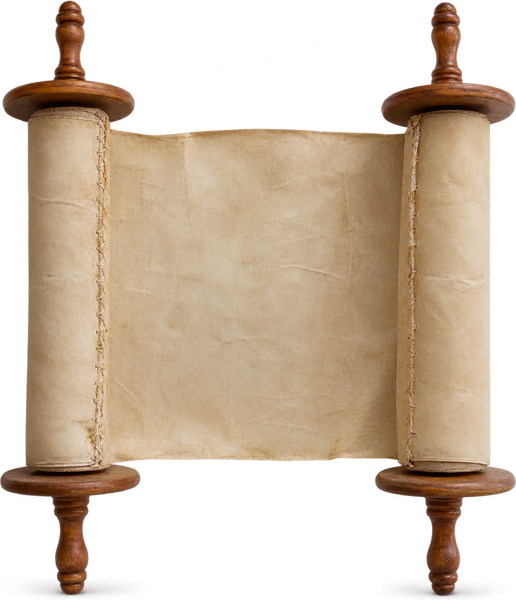
The parchment contains two passages: Deuteronomy 6:4–9 (Shema) and Deuteronomy 11:13–21 (Ve-hayah im shamoa), handwritten by a sofer. The divine name Shaddai is usually written on the back.4,5,6
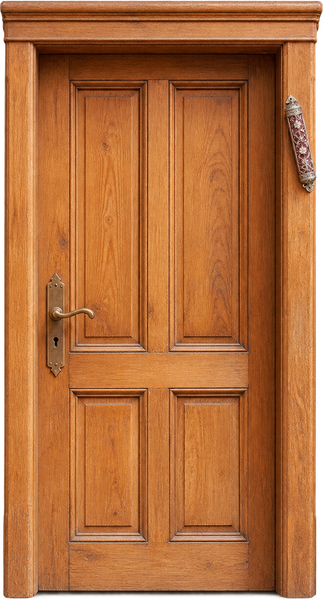
It is fixed to the right-hand doorpost on entering a room, in the upper third. Following the Rema, Ashkenazim fix it at a slant (top pointing inward) as a compromise between vertical and horizontal positions; Sephardim fix it vertically.7,8
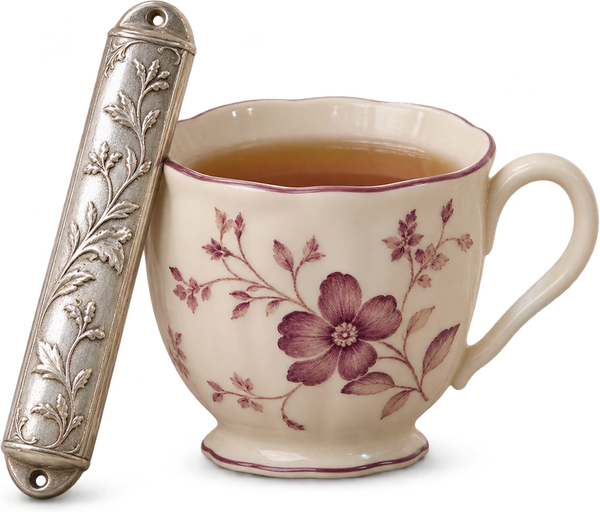
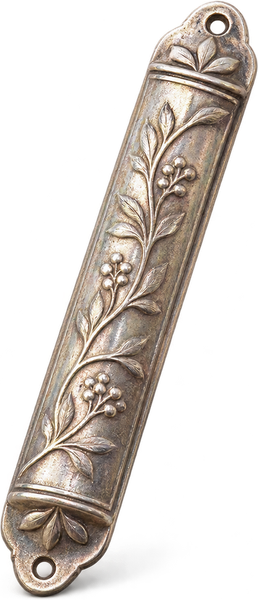
The mezuzah is checked regularly (according to the Talmud, twice in seven years), because the writing may fade. The value of a mezuzah lies in the parchment, not in the decorative case.9
Historical development
The oldest surviving mezuzot come from the Qumran finds; their content differs in part from the later standard.10
Related traditions
Many people touch the mezuzah when passing through the door and kiss their fingers. This is a custom, not an obligation.
On the doorposts of houses in historic Jewish quarters, including Prague and Moravian towns, notches left by removed mezuzot are still visible in places.
FAQ
What is inside a mezuzah?
A handwritten parchment with two passages from Deuteronomy, including the Shema Yisrael.
Why does it hang at a slant?
In Ashkenazi practice it is a compromise between two halakhic opinions (vertical vs. horizontal). Sephardim place it vertically.
Is a mezuzah an amulet?
Popular belief attributed protective power to it, but halakhic authorities such as Maimonides stress that it is a reminder of the commandments.
Sources
Primary sources
- 1Deuteronomy, 6:9 text ↗
- 2Deuteronomy, 11:20 text ↗
- 3Mishneh Torah, Hilchot Tefilin u-mezuza ve-sefer Tora 5:4
- 4Deuteronomy, 6:4–9 text ↗
- 5Deuteronomy, 11:13–21 text ↗
- 6Shulchan Arukh, Yoreh De’ah, 288 text ↗
- 7Babylonian Talmud, Menachot, 33a text ↗
- 8Shulchan Arukh, Yoreh De’ah, 289:6 – glosa Rema text ↗
- 9Babylonian Talmud, Yoma, 11a text ↗
- 11Shulchan Arukh, Yoreh De’ah, 285–291 text ↗
- 12Mishneh Torah