Origin
Meaning
The menorah is an image of God's light and presence among the people. The prophet Zechariah links it with the words "not by might, nor by power, but by my spirit".5
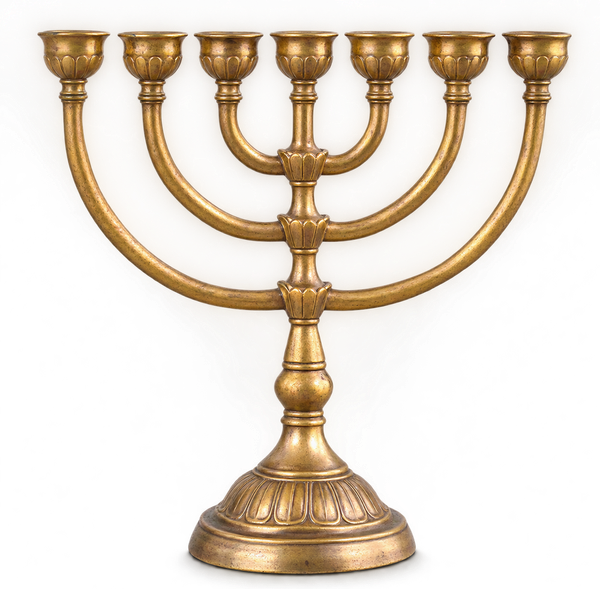
The seven branches are often interpreted as the seven days of creation; interpretations vary and are not binding.
Use
Historical development
After the conquest of Jerusalem in 70 CE the Romans carried the Temple vessels off to Rome; a relief on the Arch of Titus shows soldiers carrying the menorah.9
In late antiquity the menorah became the most widespread Jewish symbol on synagogue mosaics, tombstones and lamps. In 1949 it became part of the state emblem of Israel, framed by olive branches.9
Related traditions
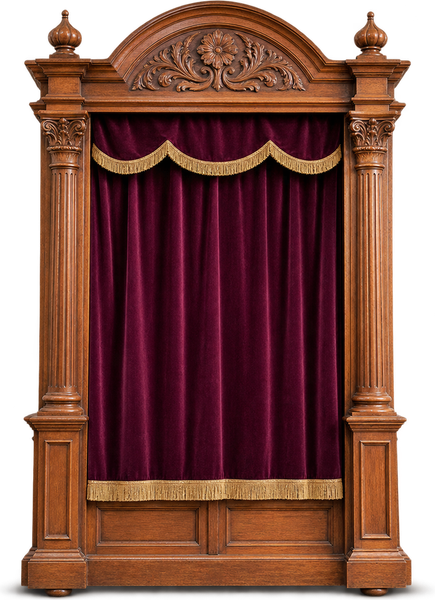
The menorah motif appears on synagogue ark curtains, Torah shields and tombstones, especially of priestly families (kohanim) and in Sephardi settings.
In 1956 British parliamentarians presented the Knesset with a large bronze menorah by Benno Elkan bearing reliefs from Jewish history.
FAQ
What is the difference between a menorah and a hanukkiah?
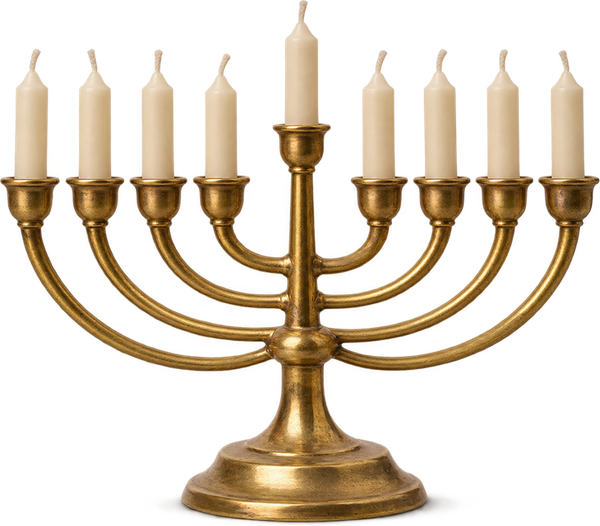
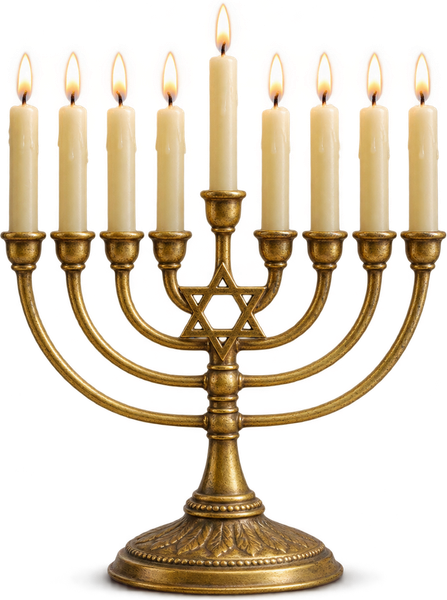
The menorah has seven branches and stood in the Temple. The hanukkiah has eight lights plus the helper light, the shamash, and is used only on Hanukkah.
Why is an exact copy of the menorah not used in synagogues?
The Talmud forbids making exact replicas of the Temple vessels outside the Temple.
Where is the menorah today?
The original Temple menorah has been lost; the last documented mention is from Rome. Legends about where it was hidden have no historical basis.