History and origins
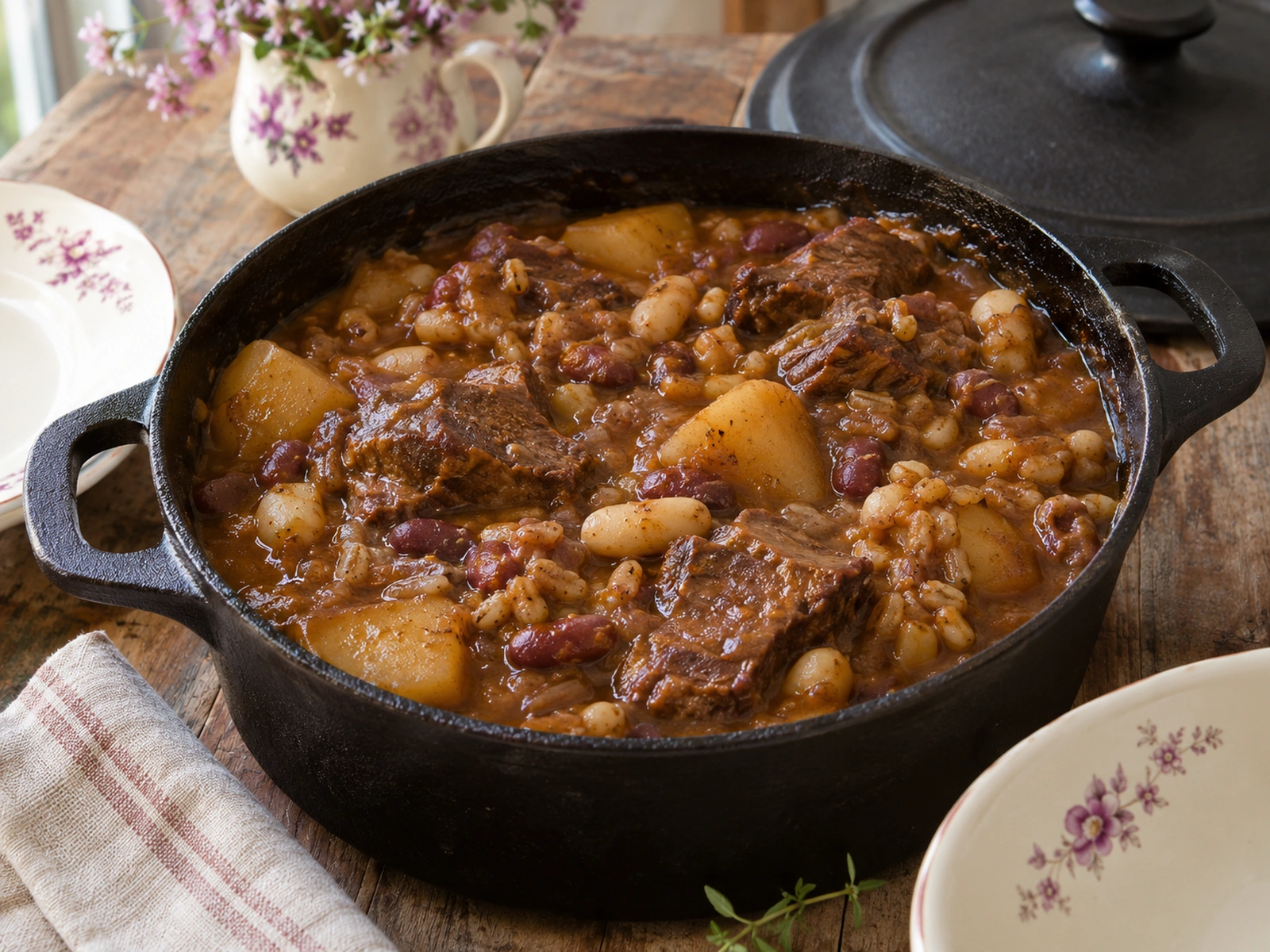
A hot dish for Saturday lunch solves a traditional problem: there is no cooking on Shabbat, but food prepared in advance may be kept warm. Rabbinic tradition also emphasized hot food on Shabbat as a rejection of the Karaite interpretation, which forbade the use of fire prepared in advance.1
The origin of the word cholent (shalet) is uncertain; it is most often derived from Old French chald ("warm"), though other explanations exist.
Regional variations
Sephardi and Middle Eastern counterparts are called chamin ("hot") and include Moroccan Dafina and Iraqi tbit; they often contain eggs cooked in their shells overnight.2
Ashkenazi cholent often has kishke (a casing stuffed with flour and fat) or a dumpling (kneidl) baked into it. In the Czech lands it developed into šoulet.