History and origins
Halakhah
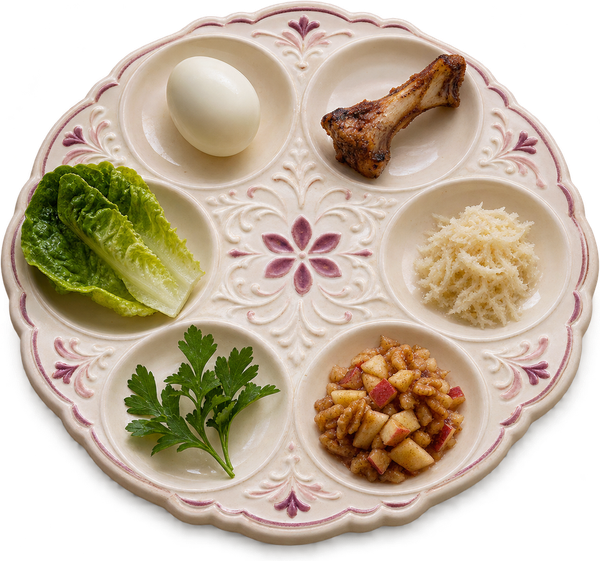
Charoset is already mentioned in the Mishnah as part of the seder table; according to one of the opinions cited there, it is a commandment.1
Interpretation
The Talmud explains charoset as a reminder of the mortar (tit) with which the Israelites worked in Egypt; the bitter herb (maror) is dipped into it.2
Regional variations
MinhagAshkenazim
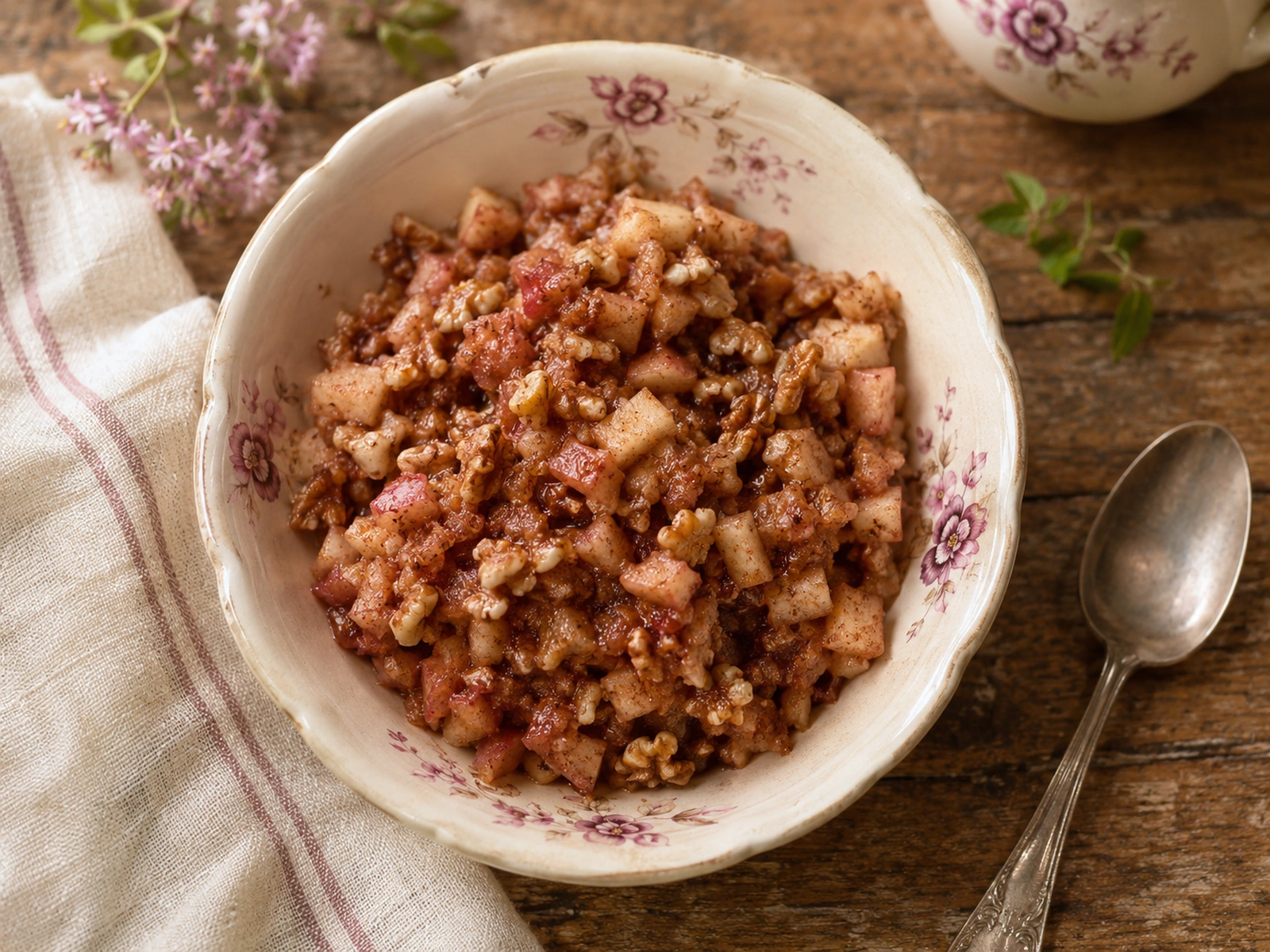
Ashkenazi charoset is usually made from grated apples, walnuts, cinnamon and sweet wine.
MinhagSephardimMizrahim⁂ To verify
Sephardi and Middle Eastern versions are based on dates, raisins or figs, often with almonds and spices; Iraqi communities use date syrup (silan) with nuts.3
Sources
Primary sources
- 1Mishnah Pesachim, 10:3 text ↗
- 2Babylonian Talmud, Pesachim, 116a text ↗