Minor holidays
Lag BaOmerל״ג בָּעֹמֶר
1 day · 18 Iyar
- History
- Bible
- Halakhah
- Minhag
- Folk custom
- Modern practice
- Interpretation
- Transliteration
- Lag BaOmer
- Pronunciation
- lag ba-O-mer
- Duration
- 1 day
In 60 seconds
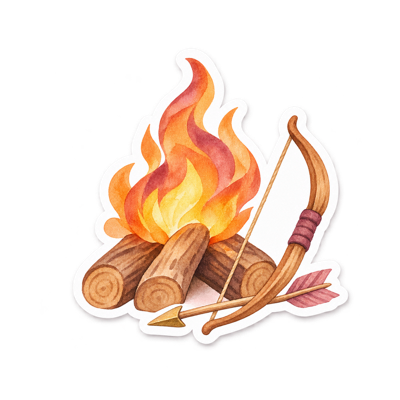
Lag BaOmer is the 33rd day (the letters lamed and gimel = 33) of the Omer count between Passover and Shavuot, that is, 18 Iyar. The Omer period is marked by mourning customs – no weddings are held and hair is not cut – in memory of Rabbi Akiva's students, who according to the Talmud died at this time. On Lag BaOmer these customs are suspended. Since the 16th century the day has been associated with Rabbi Shimon bar Yochai, to whom tradition attributes the Zohar; thousands of people make a pilgrimage to his tomb in Meron. In the evening bonfires are lit, children go on outings with bows and arrows, and weddings and the first haircut of three-year-old boys take place. The Zionist tradition links the day with the Bar Kokhba revolt.
Next date
When
Begins
Monday, 24 May 2027, at sunset (20:53)
Ends
Tuesday, 25 May 2027, after nightfall (21:58)
1 day
Begins
Saturday, 13 May 2028, at sunset (20:39)
Ends
Sunday, 14 May 2028, after nightfall (21:41)
1 day
Begins
Wednesday, 2 May 2029, at sunset (20:23)
Ends
Thursday, 3 May 2029, after nightfall (21:21)
1 day
Times for Prague · Diaspora
History and origins
The Torah commands counting seven weeks from the bringing of the Omer (a sheaf of barley) until Shavuot. Lag BaOmer is the 33rd day of this count.1
The Talmud relates that between Passover and Shavuot 24,000 of Rabbi Akiva's students died “because they did not treat one another with respect”. The mourning customs of the Omer period rest on this.2
That the dying ceased on the 33rd day is stated only by medieval authorities; this information is not in the Talmud. The association with Rabbi Shimon bar Yochai and his hillula (anniversary of death) spread from Safed in the 16th century.3
Religious meaning
In the kabbalistic tradition it is a day of joy at the revelation of the inner Torah; tradition attributes the Zohar to Shimon bar Yochai (academic scholarship dates it to the 13th century, Castile).3
The Zionist movement and Israeli education emphasized the link with the Bar Kokhba revolt (132–135 CE) and with Rabbi Akiva as its supporter; the bows and arrows are also interpreted in this spirit.
Core traditions
Bonfires on the eve of Lag BaOmer, especially in Israel. Outings into nature and bows and arrows for children – according to a popular explanation, because no rainbow appeared during the lifetime of Rashbi.
Upsherin / chalakah – the first haircut of three-year-old boys, among Hasidim and Sephardim often precisely on Lag BaOmer and in Meron.

How it is observed
The mourning customs of the Omer (no weddings, haircuts or music) are suspended on Lag BaOmer; according to the Shulchan Arukh, Sephardim cut their hair only on the morning of the 34th day, while Ashkenazim, following the Rema, already on the 33rd. The length of the mourning period also varies by custom.4
Tachanun is not said. The day has no rest from work and no special service.5
Prayers and blessings
No special liturgy is prescribed; in Meron and in Hasidic communities the song Bar Yochai (Shimon Labi, 16th century) is sung.
Symbols and objects
Fire, bow and arrow, and the tomb in Meron are the most widespread symbols of the day.
Traditional foods
There are no established special foods; in Israel potatoes and meat are roasted at the bonfires. Some communities eat carobs following the legend of Rashbi in the cave.6
Differences between communities
The hillula in Meron draws tens to hundreds of thousands of pilgrims every year. In the Meron disaster on 30 April 2021, 45 people were killed, which led to a state commission of inquiry and to limits on the number of pilgrims.
In North African communities hillulot were held in a similar spirit at the tombs of local holy men.
In the Czech lands
This database has no evidence of particular historical Lag BaOmer customs in the Czech lands; in some communities outings or gatherings are held today.
For children
An outing into nature, roasting food over a fire under adult supervision, and games with a bow.
FAQ
What does “Lag” mean?
The letters ל (30) and ג (3) give the number 33 – the 33rd day of the Omer.
Why are no weddings held during the Omer period?
In memory of the death of Rabbi Akiva's students; it is a custom whose extent varies by community.
Why are bonfires lit?
Popularly, as a reminder of the “light” of the Torah of Rabbi Shimon bar Yochai; the custom is not halakhic.
Who was Rabbi Shimon bar Yochai?
A 2nd-century tanna, a student of Rabbi Akiva; tradition attributes the Zohar to him, while academic scholarship dates it to the 13th century.
Sources
Primary sources
- 1Leviticus, 23:15–16 text ↗
- 2Babylonian Talmud, Yevamot, 62b text ↗
- 4Shulchan Arukh, Orach Chayim, 493:1–3 text ↗
- 5Shulchan Arukh, Orach Chayim, 131:6 text ↗
- 6Babylonian Talmud, Shabbat, 33b text ↗
- 7Shulchan Arukh, Orach Chayim, 493:1 text ↗
- 8Shulchan Arukh, Orach Chayim, 493 text ↗