Mazeltov.cz מסביר, לא פוסק. מנהגי הכשרות משתנים לפי קהילה, זרם ומשפחה. בשאלה מעשית פנו לרב הקהילה שלכם. הטקסטים במדור זה הם טיוטת מערכת שממתינה לבדיקה מקצועית.
The ban on chametz
The Torah commands eating unleavened bread for seven days and forbids eating anything leavened during them; for a violation it prescribes the penalty of karet. It also forbids leaven to be found in the house at all.1
From the verses “no leavened bread shall be seen with you” and “no leaven shall be found in your houses” tradition derives two prohibitions of ownership: bal yera’eh (בַּל יֵרָאֶה) and bal yimatze (בַּל יִמָּצֵא). On Passover it is thus forbidden to eat chametz, to derive benefit from it and to own it.2,3
According to the Mishnah, chametz that was owned by a Jew during Passover remains forbidden for benefit even after the festival (chametz she-avar alav ha-Pesach). For this reason many people, after Passover, buy grain products only from shops they know sold their chametz or are under non-Jewish ownership.4
The ban on chametz on Passover is stricter than the ordinary rules of kashrut: according to the codes, nullification in sixty (bitul be-shishim, see The Kosher Kitchen) does not apply to it, so even a minute admixture renders a dish forbidden.5
The five grains and matzah
According to the Mishnah, the obligation to eat matzah can be fulfilled only with five kinds of grain: wheat, barley, spelt, rye (shifon) and oats (shibbolet shu’al); the identification of the last two is debated in modern times. Only these grains become chametz, if they are left to rise after being mixed with water.6
Matzah (מַצָּה) is therefore a dough of flour and water baked before it can rise; according to established practice the whole process from mixing to placing in the oven takes no longer than about 18 minutes.7
The biblical commandment to eat matzah applies to the first evening (in the diaspora, by custom, to both seder nights); for the rest of the festival matzah is permitted but not obligatory. For this matzat mitzvah traditional practice uses shmurah matzah (מַצָּה שְׁמוּרָה), whose grain is guarded from contact with water from harvest or from milling.8
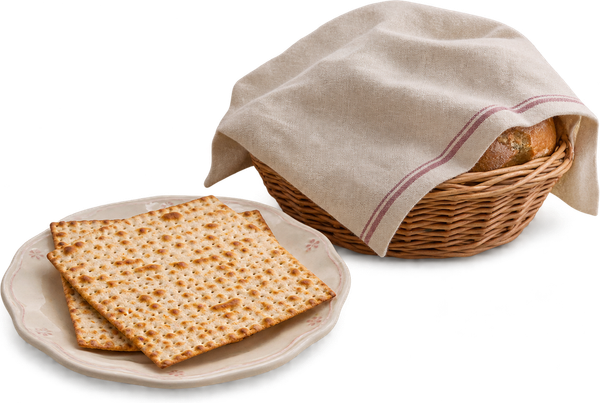
Alongside hand-baked round shmurah matzah, machine-made square matzah is in common use today. Some Hasidic and Orthodox communities prefer hand-baked matzah for the seder.
Kitniyot: legumes and rice
Kitniyot (קִטְנִיּוֹת) are legumes, rice, millet, corn and similar crops. From the Talmud’s point of view they are not chametz and cannot become chametz. Nevertheless, Ashkenazi communities have refrained from eating them on Passover since the Middle Ages; the reasons given are confusion with grain or admixture of grain. The Rema records this custom in his gloss on the Shulchan Arukh.9
Sephardi and Mizrahi communities usually do not have this custom and eat kitniyot on Passover. Some, such as part of the Moroccan communities, avoid rice or other specific crops; many carefully sort rice and legumes before the festival to remove grains of wheat or barley.
The scope of the custom varies among Ashkenazim (peanuts, soy, rapeseed oil, derivatives). Many Orthodox authorities stress that it is a custom, not the prohibition of chametz, and is therefore more lenient in need (illness, shortage of food). Products containing kitniyot are sometimes specially labelled “for kitniyot eaters”.
The Conservative/Masorti movement has reconsidered this custom for Ashkenazim: the Law Committee of the Israeli Masorti movement permitted kitniyot in a responsum by Rabbi David Golinkin, and in December 2015 the Committee on Jewish Law and Standards (CJLS) of the American Rabbinical Assembly adopted a similar position. Orthodox Ashkenazi communities keep the custom; in Reform Judaism it is a matter of personal choice.
Searching for, burning and selling chametz
Bedikat chametz (בְּדִיקַת חָמֵץ): on the evening before 14 Nisan the house is searched by candlelight. This is followed by the Aramaic formula kol chamira, which nullifies all chametz the owner does not know about. According to the Talmud, nullification alone would suffice by Torah law; searching and burning are rabbinic enactments.10,11,12,13,14
Bi’ur chametz (בִּעוּר חָמֵץ): on the morning of 14 Nisan, by a set hour, the chametz found is burned and the nullification is repeated. From then on chametz is neither eaten nor owned. The practical course of cleaning and the seder is described in the entry פסח.15
Selling chametz (mechirat chametz, מְכִירַת חָמֵץ): supplies that cannot be used up (for example grain alcohol, flour, opened packages) can be legally sold to a non-Jew before the festival and bought back after Passover. In practice the sale is entrusted to a rabbi acting as agent; the chametz is stored in a closed and marked cupboard. The codes recognise the sale if it is genuine.16
Conservative/Masorti rabbis usually also arrange the sale of chametz; in Reform communities it is rarer, and the emphasis is rather on symbolically removing chametz from the home.
Passover dishes and kashering
Because dishes absorb chametz during the year, traditional households keep special sets for Passover – again meat and dairy – stored separately for the rest of the year. Those who do not have them can kasher some of their dishes for Passover; the general principles (hagalah, libun, materials) are described in The Kosher Kitchen.
For Passover the rules are stricter than during the year. According to the Rema, Ashkenazim do not kasher glass for Passover, while the Shulchan Arukh considers it non-absorbent; ceramics cannot be kashered according to either. Kitchen counters, the sink and the stove are in practice kashered or covered with foil or boards.17,18
According to the codes, kashering should be done before the time when chametz becomes forbidden (the morning of 14 Nisan); many communities hold a communal kashering of vessels (hagalah) before Passover under a rabbi’s supervision.19
Certification and special customs
An ordinary kashrut certificate is not enough: food for Passover carries a special kosher le-Pesach label (Hebrew כָּשֵׁר לְפֶסַח), which guarantees that neither the product nor the production line came into contact with chametz. The certificate often also states whether the product contains kitniyot. On labelling in general see Certification and Hechsher.
Some products (for example fresh fruit and vegetables, some pure raw ingredients) do not require certification according to many authorities; lists are published every year by rabbinates and certification agencies. Medicines and cosmetics are a separate question best discussed with a rabbi and a doctor; never stop taking a medicine on your own.
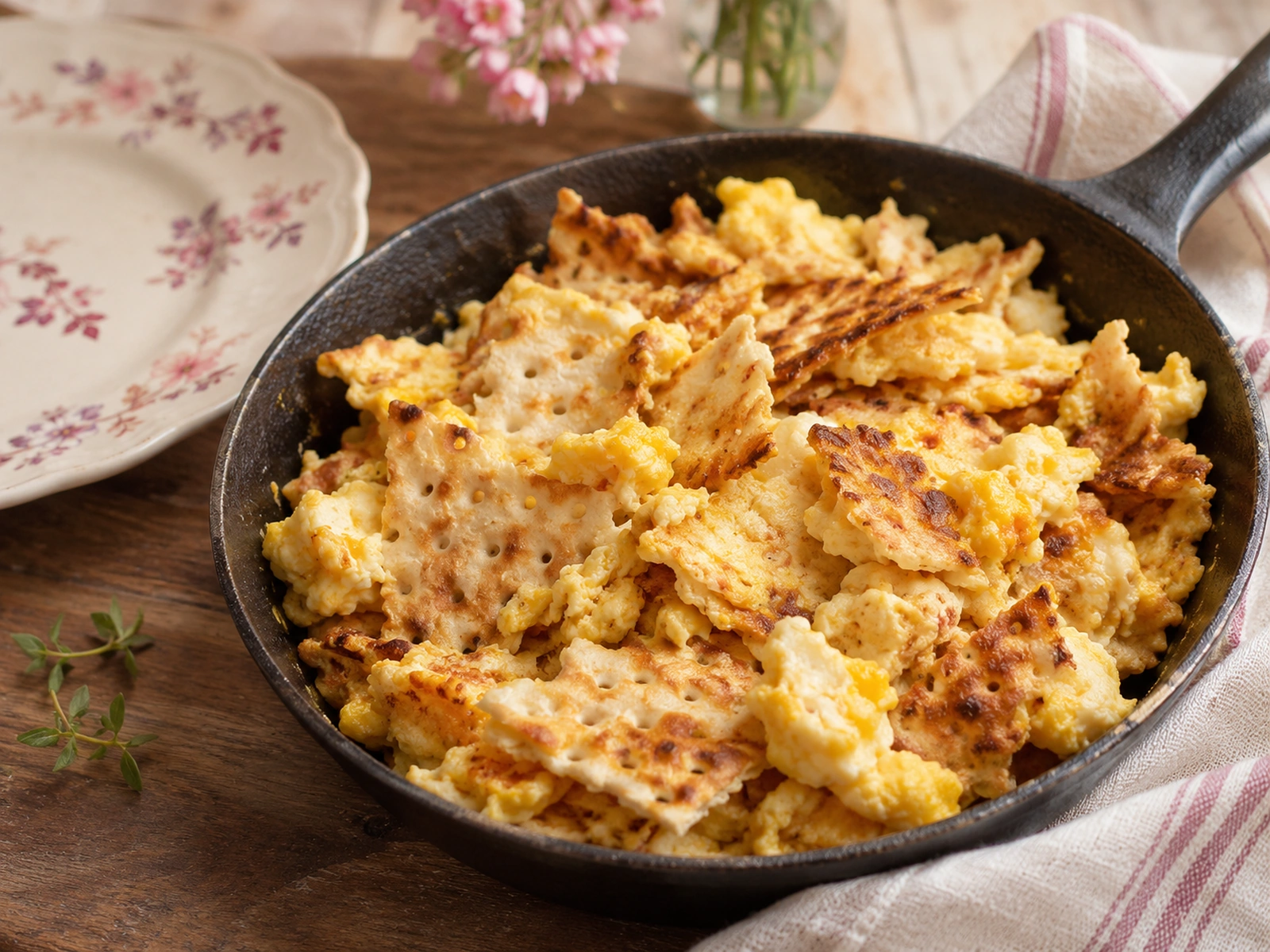
Gebrochts (Yiddish “broken”, i.e. soaked; Hebrew matzah sheruyah) is the custom of many Hasidic communities of avoiding on Passover matzah that has come into contact with liquid (matzah balls, Matzah brei). The reason is concern that unbaked flour remained in the matzah. Most non-Hasidic Ashkenazi communities and Sephardim do not have this custom; many who keep it relax it on the eighth day of the festival in the diaspora.
שאלות נפוצות
Can I eat rice on Passover?
It depends on the community. Following the custom recorded by the Rema, Ashkenazim avoid rice and legumes (kitniyot); Sephardi and Mizrahi Jews usually eat them. The Conservative/Masorti movement has lifted the custom for Ashkenazim; Orthodox Ashkenazim keep it.
Do I have to throw out everything that contains flour?
Not necessarily. Besides using it up before the festival, chametz can be sold to a non-Jew through a rabbi and taken back after Passover. It is stored in a closed cupboard that is not used during the festival.
Is it enough to buy ordinary kosher products?
No. In traditional practice products labelled kosher le-Pesach are bought for Passover. An ordinary hechsher does not guarantee that a product contains no chametz or was not made on a line that processes chametz.
What matzah do I need for the seder?
For the obligation to eat matzah at the seder, traditional practice uses shmurah matzah, hand-made or machine-made. For the rest of the festival ordinary matzah certified kosher le-Pesach is sufficient.
What does it mean that someone does not eat gebrochts?
They keep the Hasidic custom of not eating matzah soaked in liquid on Passover, for example matzah balls in soup. It is not a general prohibition; most communities eat gebrochts.⁂ לאימות
מקורות
מקורות ראשוניים
- 1Exodus, 12:15–20 text ↗
- 2Exodus, 13:7 text ↗
- 3Exodus, 12:19 text ↗
- 4Mishnah Pesachim, 2:2 text ↗
- 5Shulchan Arukh, Orach Chayim, 447 text ↗
- 6Mishnah Pesachim, 2:5 text ↗
- 7Shulchan Arukh, Orach Chayim, 459:2 text ↗
- 8Exodus, 12:18 text ↗
- 9Shulchan Arukh, Orach Chayim, 453:1 text ↗
- 10Mishnah Pesachim, 1:1 text ↗
- 11Babylonian Talmud, Pesachim, 2a text ↗
- 12Babylonian Talmud, Pesachim, 4b text ↗
- 13Shulchan Arukh, Orach Chayim, 431 text ↗
- 14Shulchan Arukh, Orach Chayim, 434 text ↗
- 15Shulchan Arukh, Orach Chayim, 445 text ↗
- 16Shulchan Arukh, Orach Chayim, 448:3 text ↗
- 17Shulchan Arukh, Orach Chayim, 451 text ↗
- 18Shulchan Arukh, Orach Chayim, 451:26 text ↗
- 19Shulchan Arukh, Orach Chayim, 452 text ↗
- 20Shulchan Arukh, Orach Chayim, 453 text ↗
- 21Mishnah Berurah