Meaning and obligation
The Talmud calls lighting the Shabbat light an obligation and links it with peace in the home (shalom bayit): without light, people stumble at home and quarrels arise.1,2
The Mishnah counts lighting the lamp among three commandments entrusted especially to women.3
The Shulchan Arukh rules that both men and women are obligated; the woman of the house takes precedence, and if she is not present, the man lights.4
Time and procedure
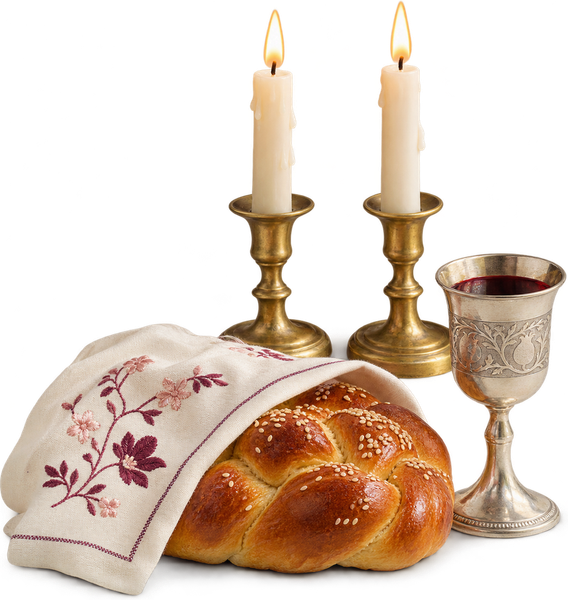
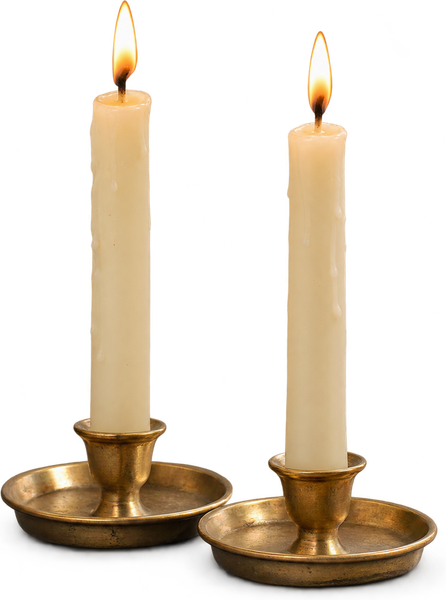
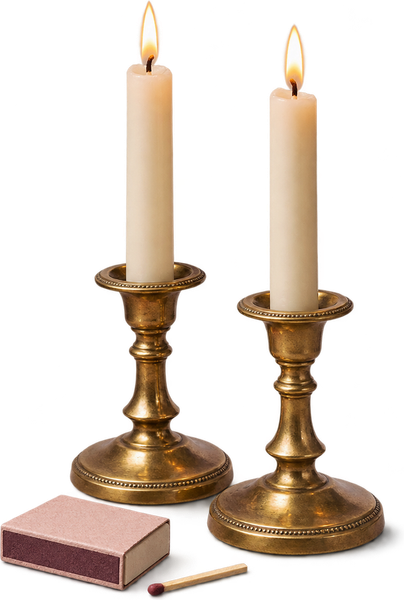
The candles are lit before sunset, because no fire is kindled on Shabbat. The usual time given is 18 minutes before sunset; in Jerusalem, by local custom, 40 minutes.5
In Ashkenazi practice one first lights and then, with eyes covered, says the blessing; many Sephardi communities first bless and then light. For the text, see Blessing over the Shabbat candles.6
The two candles are interpreted as "remember" and "keep"; some families add a candle for each child.
On holidays
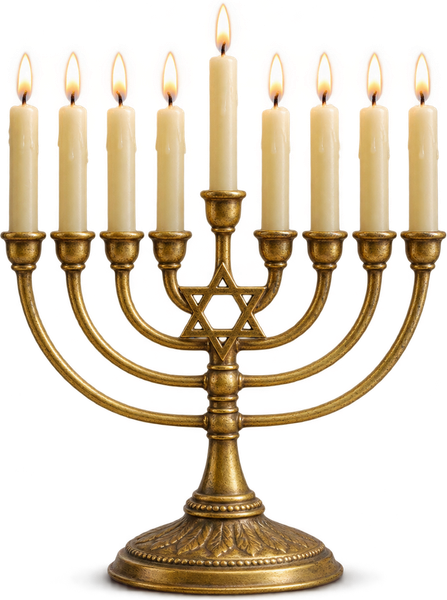
Candles are also lit before holidays. Unlike on Shabbat, on a holiday it is permitted to light from an already burning flame, so in the Diaspora on the second evening of a holiday the candles are lit only after nightfall, from an existing fire.
שאלות נפוצות
Can electric light be used?
Some halakhic authorities permit it in case of need (e.g. in a hospital); candles or oil lamps are generally recommended.⁂ לאימות
Why does the woman cover her eyes during the blessing?
Because according to Ashkenazi custom the blessing comes only after the lighting; by covering her eyes she "sees" the light only after the blessing.⁂ לאימות
מקורות
מקורות ראשוניים
- 1Babylonian Talmud, Shabbat, 25b text ↗
- 2Babylonian Talmud, Shabbat, 23b text ↗
- 3Mishnah Shabbat, 2:6 text ↗
- 4Shulchan Arukh, Orach Chayim, 263:2–3 text ↗
- 5Exodus, 35:3 text ↗
- 6Shulchan Arukh, Orach Chayim, 263:5 text ↗
- 7Shulchan Arukh, Orach Chayim, 263 text ↗