Origin
The Mishnah records a dispute between the schools of Shammai and Hillel over the order of the blessings over light, food, spices and havdalah; the ceremony is thus attested at least from the time of the Mishnah.1
Havdalah is also mentioned in prayer: in the Saturday evening Amidah a special insertion is added to the blessing for knowledge.2
The four blessings
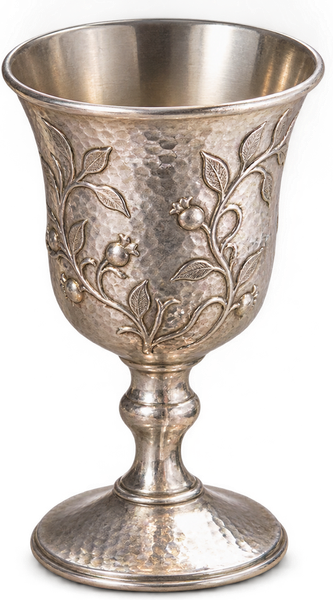
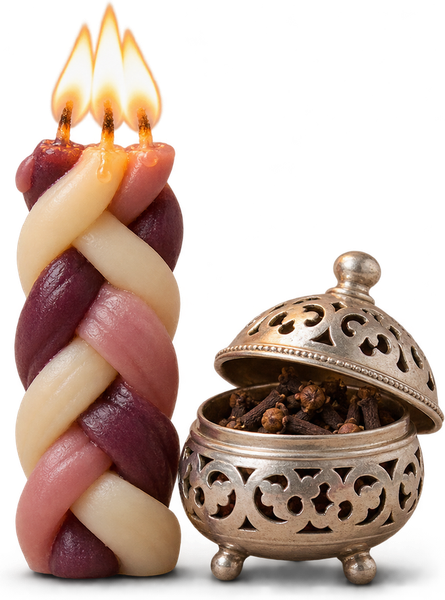
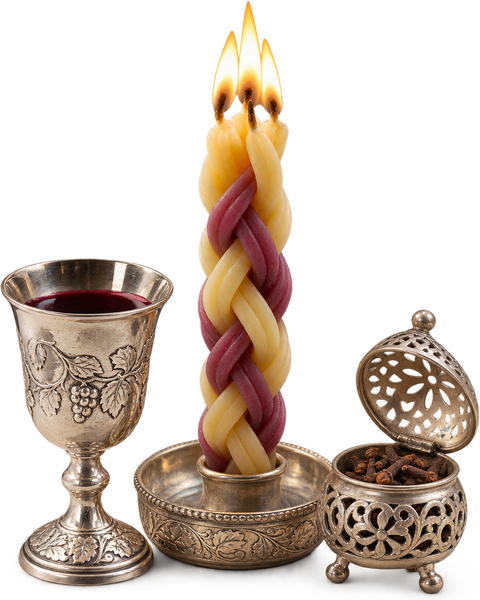
The order in common practice: wine, fragrant spices (בְּשָׂמִים, besamim), light (בּוֹרֵא מְאוֹרֵי הָאֵשׁ) and finally ha-mavdil, the blessing for separating the holy from the everyday, light from darkness and the seventh day from the six working days. For the text, see Havdalah blessings.3,4
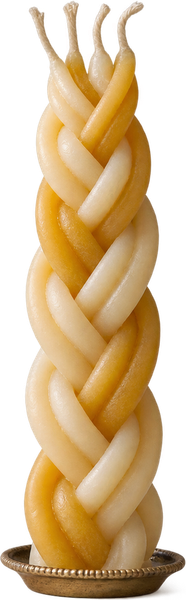
A candle with at least two wicks is used, because the blessing speaks of "lights" in the plural; see Havdalah candle.5
Widespread customs: looking at one's fingernails in the candlelight, extinguishing the candle in the remaining wine and the greeting shavua tov ("a good week"). Ha-Mavdil and Eliyahu ha-Navi are often sung.
After holidays
After holidays that do not fall on Shabbat, havdalah is said over wine without spices or light. After Yom Kippur the blessing over light is added, but not the one over spices.6
שאלות נפוצות
When is havdalah made?
After nightfall, when Shabbat ends (traditionally when three stars appear). Times for a specific location are given in Jewish calendars.
Why do people smell spices?
The traditional explanation is that the fragrance is meant to comfort the soul as Shabbat departs; this is an interpretation, not a reason given in the Torah.⁂ לאימות
מקורות
מקורות ראשוניים
- 1Mishnah Berakhot, 8:5 text ↗
- 2Mishnah Berakhot, 5:2 text ↗
- 3Shulchan Arukh, Orach Chayim, 296–299 text ↗
- 4Siddur
- 5Shulchan Arukh, Orach Chayim, 298 text ↗
- 6Shulchan Arukh, Orach Chayim, 624 text ↗