מקור
משמעות
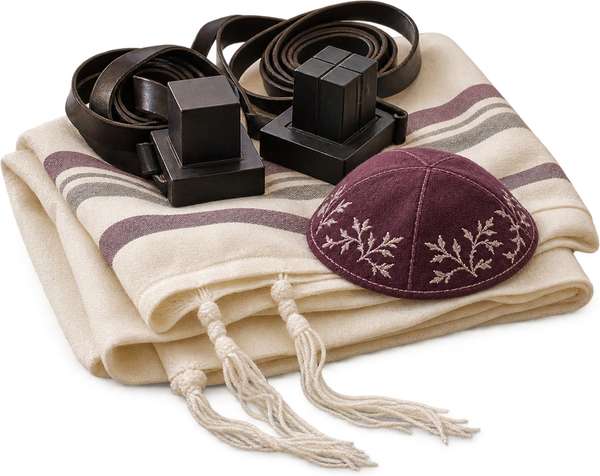
Tefillin on the arm opposite the heart and on the head express that both feeling and thought are to be bound to the service of God.5
שימוש
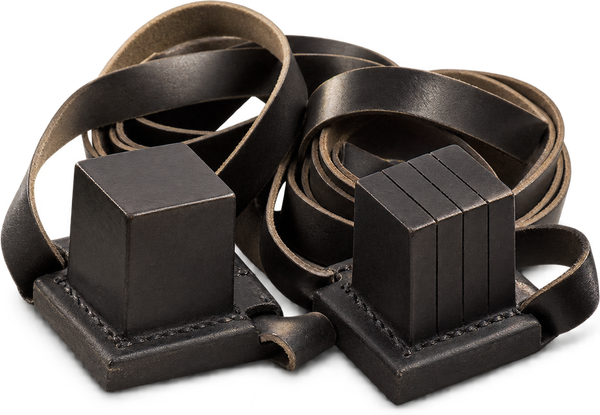
The boxes contain four passages: Exodus 13:1–10, Exodus 13:11–16, Deuteronomy 6:4–9 and Deuteronomy 11:13–21; in the head tefillin on four parchments, in the arm tefillin on one.6
They are worn during morning prayer on weekdays, not on Shabbat and festivals, which are themselves a "sign".7,8
The order of the passages in the boxes differs according to Rashi and Rabbeinu Tam; some wear both kinds.9
התפתחות היסטורית
Tefillin from the Second Temple period have been found at Qumran. The Greek name phylakterion ("protective object") appears in the New Testament.10
מסורות קשורות
Boys begin wearing tefillin in connection with their bar mitzvah, in many communities several weeks beforehand.
Orthodox practice does not prescribe tefillin for women; the Talmud mentions that Michal, daughter of Saul, wore them. The Conservative movement encourages women to take on this commandment.11
שאלות נפוצות
Why are tefillin not worn on Shabbat?
Tefillin are a "sign"; Shabbat and festivals are themselves a sign of the covenant, so they do not need them.
On which arm are tefillin placed?
On the weaker arm – for a right-handed person the left – on the muscle opposite the heart.
Are tefillin an amulet?
No. The Greek name suggests protection, but halakhically they are the fulfillment of a commandment.
מקורות
מקורות ראשוניים
- 1Exodus, 13:9 text ↗
- 2Exodus, 13:16 text ↗
- 3Deuteronomy, 6:8 text ↗
- 4Deuteronomy, 11:18 text ↗
- 5Shulchan Arukh, Orach Chayim, 25:5 text ↗
- 6Babylonian Talmud, Menachot, 34b text ↗
- 7Babylonian Talmud, Menachot, 36b text ↗
- 8Shulchan Arukh, Orach Chayim, 31:1 text ↗
- 9Shulchan Arukh, Orach Chayim, 34:1–2 text ↗
- 11Babylonian Talmud, Eruvin, 96a text ↗
- 12Babylonian Talmud, Menachot, 34b–37b text ↗
- 13Shulchan Arukh, Orach Chayim, 25–45 text ↗