מקור
משמעות
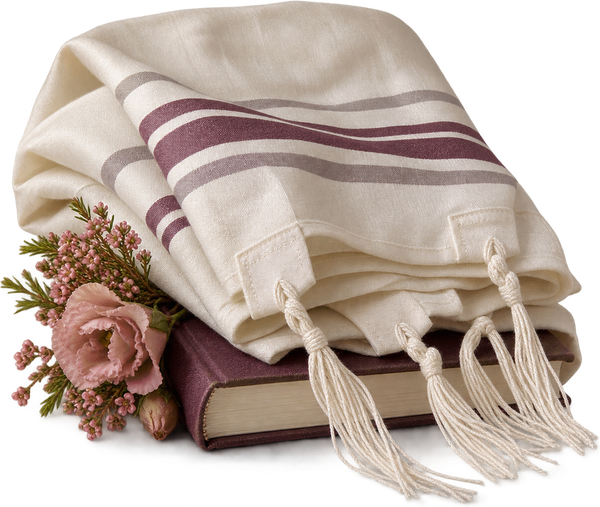
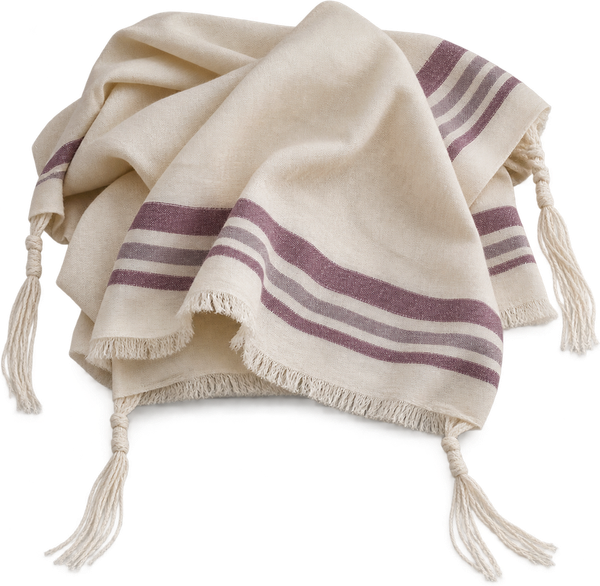
Looking at the tzitzit is meant to recall the commandments. The Talmud interprets a chain: the blue recalls the sea, the sea the sky, and the sky the Throne of Glory.3
שימוש
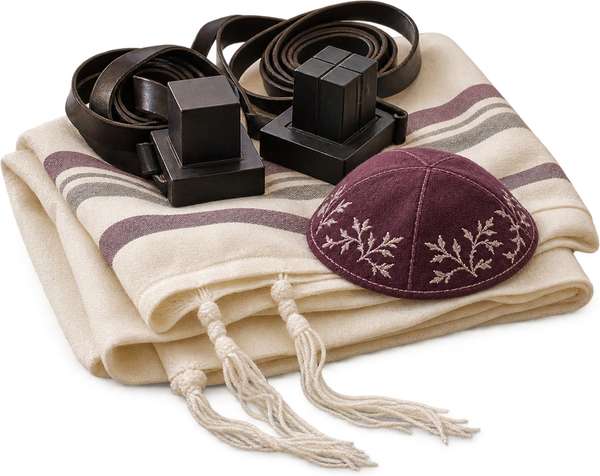
The large tallit is worn during morning prayer (and on Yom Kippur during all the prayers), and a blessing is recited. The small tallit (tallit katan) is worn all day under the clothes in Orthodox practice.4,5
In Ashkenazi communities the large tallit is often worn only by married men; in Sephardi and German communities from bar mitzvah.
In Conservative and Reform Judaism women also wear a tallit.
התפתחות היסטורית
The production of the blue dye tekhelet from a sea snail was lost in the early Middle Ages, so for a long time tzitzit were made only in white. Since the 20th century its production has been revived; whether it is genuine tekhelet is disputed among authorities.6
מסורות קשורות
The stripes on a tallit have no halakhic significance; their color and number are a matter of custom. The Israeli flag is said to be inspired by the tallit.
By custom a man is buried in his tallit, from which one fringe is removed or cut.
שאלות נפוצות
Why is the tallit worn only in the morning?
The commandment of tzitzit applies by day; that is why the large tallit is put on for morning prayer. The exception is Kol Nidre on Yom Kippur.
What are tzitzit?
Fringes of threads tied with prescribed knots at the four corners of the tallit.
May women wear a tallit?
In Orthodoxy it is not usual; in Conservative and Reform communities, yes.
מקורות
מקורות ראשוניים
- 1Numbers, 15:37–41 text ↗
- 2Deuteronomy, 22:12 text ↗
- 3Babylonian Talmud, Menachot, 43b text ↗
- 4Shulchan Arukh, Orach Chayim, 8 text ↗
- 5Shulchan Arukh, Orach Chayim, 24:1 text ↗
- 6Babylonian Talmud, Menachot, 42b–44a text ↗
- 7Shulchan Arukh, Orach Chayim, 8–24 text ↗