היסטוריה ומקורות
מקרא
The Book of Esther prescribes sending gifts of food to one another on Purim (mishloach manot) and giving gifts to the poor; sweet pastries have long been part of this.1
מנהג עממיאשכנזים⁂ לאימות
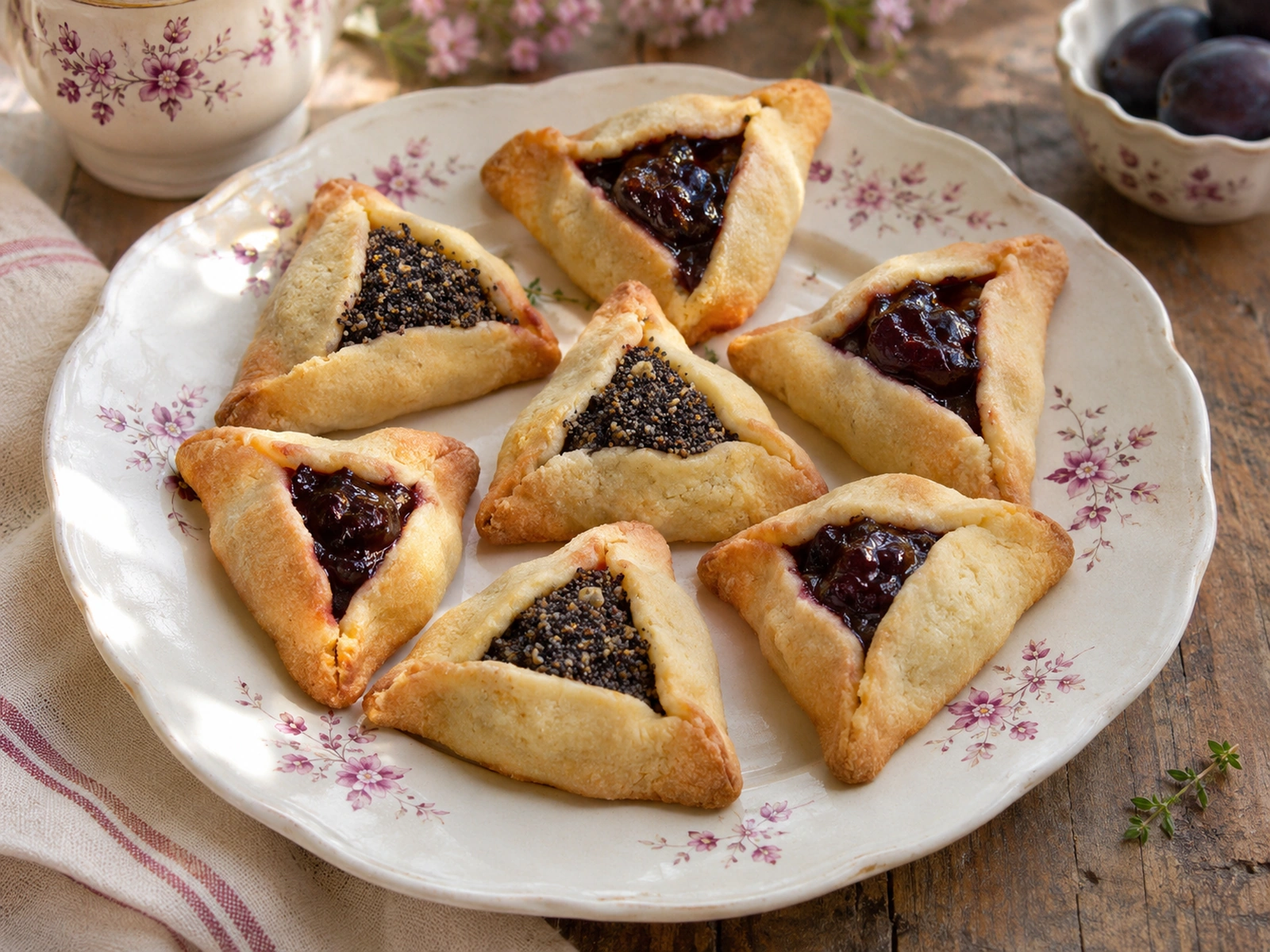
The Yiddish name homentashn ("Haman's pockets") is usually explained as a pun on the German Mohntaschen ("poppy-seed pockets"). The Hebrew name oznei Haman means "Haman's ears"; in popular tradition the triangular shape is also linked to Haman's hat.2
גרסאות אזוריות
מנהגאשכנזים
The traditional Ashkenazi filling is poppy seed or plum butter (lekvar); modern variations use chocolate, dates, apricots or nuts.
מנהגספרדים⁂ לאימות
The dough can be a crumbly (cookie) dough or a yeast dough; Sephardi communities bake other kinds of sweets for Purim, for example fried pastries dipped in syrup.